
¿Tienes alguna duda
+34 655 641 050 >
 Alfa Romeo
 Audi
Audi
 Bentley
 BMW
BMW
 Cadillac
 Chevrolet
 Chrysler
 Citroen
 Dacia
Dacia
 Daewoo
 DAF
DAF
 Dodge
Dodge
 Ferrari
 Fiat
Fiat
 Ford
Ford
 GMC
GMC
 Honda
Honda
 Hummer
 Hyundai
 Infiniti
 Iveco
Iveco
 Jaguar
 Jeep
Jeep
 Kia
Kia
 Lada
Lada
 Lamborghini
 Lancia
 Land Rover
 MAN
MAN
 Maserati
 Maybach
 Mazda
Mazda
 Mercedes Benz
 MG
MG
 Microcar
 Mini
Mitsubishi
Mini
Mitsubishi
 Multicar
 Nissan
 Opel
Opel
 Peugeot
 Porsche
 Renault
 Rover
Rover
 SAAB
SAAB
 Seat
Seat
 Skoda
Skoda
 Smart
Smart
 SsangYong
 Subaru
 Susuki
 Toyota
 Volkswagen
 Volvo
Volvo
 Anulación de Sistema de Bloqueo en Murcia
 Copia de Llaves Coche en Murcia
 Limpieza de Filtro de Partículas en Murcia
 Pérdida de Llaves de Coches en Murcia
 Reparación de Batería de Coches Híbridos y Eléctricos en Murcia
 Reparación de Centralitas en Murcia
Reparación de Cuadros de Instrumentos Murcia
Reparación de Centralitas en Murcia
Reparación de Cuadros de Instrumentos Murcia
 Reparación de Dirección Asistida Eléctrica en Murcia
 Reparación de Llave de Coches en Murcia
 Reparación Módulo ABS en Murcia
 Reparación Módulo CAS en Murcia
 Reparación Módulo FRM en Murcia
 Reparación Módulo SRS en Murcia
 Reparación UCH Renault y Dacia en Murcia
Reprogramar Centralita en Murcia
Reparación UCH Renault y Dacia en Murcia
Reprogramar Centralita en Murcia
 Tarjetas de Coche en Murcia
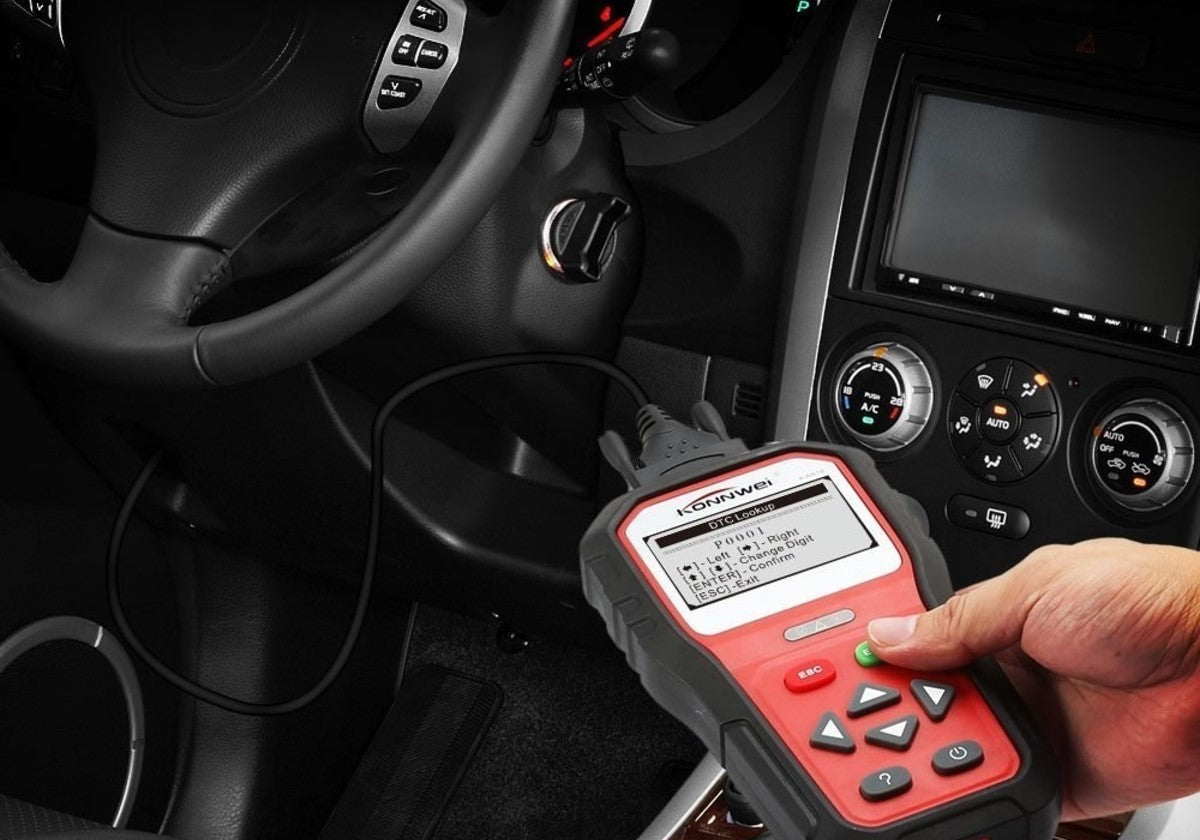
On-Board Diagnostics (OBD) is an essential tool in any modern workshop.
Thanks to it, we can quickly detect faults in critical engine sensors, preventing major breakdowns, power loss, or excessive fuel consumption.
Which sensors are most critical for engine operation?
Modern engines rely on multiple sensors that measure variables in real time, such as pressure, temperature, air/fuel mixture, and exhaust gases. Some of the most important are:
MAF (Mass Air Flow) sensor: measures the airflow entering the engine.
MAP (Manifold Absolute Pressure) sensor: measures the pressure in the intake manifold.
Lambda (O2) sensor: monitors the air/fuel ratio.
ECT (Engine Coolant Temperature) sensor: provides information about the engine temperature.
Crankshaft Position (CKP) and Camshaft Position (CMP) sensors: essential for engine timing.
When one of these sensors fails, the vehicle's behavior can become erratic, it may enter limp mode, or it may even fail to start.
How to Interpret OBD Error Codes Related to Sensors
When scanning the vehicle with an OBD tool, you will get error codes such as P0100, P0113, or P0130. These codes follow a standardized format:
P01XX: Intake system errors (e.g., MAF or MAP sensors).
P02XX: Fuel injectors.
P03XX: Ignition and cylinders.
P0XXX generally indicates codes related to the powertrain.
For example:
P0101: MAF sensor performance out of range.
P0118: Coolant temperature sensor reading too high.
P0133: Slow response of the lambda sensor.
Interpreting these codes correctly allows you to act quickly and accurately, without needing to replace parts unnecessarily.
Common Sensor Failures: MAP, MAF, Lambda, and Temperature
Below, we detail the most frequent sensor failures that cause us the most trouble at Ecumotorstock:
MAP Sensor
Symptoms: loss of power, jerking, black smoke.
Typical failure: dirt, internal fault, or erratic voltage signal.
MAF Sensor
Symptoms: unstable idle, high fuel consumption, acceleration problems.
Typical failure: dirt on the hot wire or broken sensors.
Lambda (O2) Sensor
Symptoms: high fuel consumption, failed vehicle inspections, incorrect fuel mixture.
Typical failure: aging due to mileage or contamination from oil or additives.
Engine Temperature Sensor
Symptoms: difficult starting, abnormally activated cooling fan, error message on the instrument panel.
Typical failure: out-of-range resistance or short circuit.
In all these cases, a correct OBD diagnosis is key to identifying the exact source of the fault and avoiding unnecessary replacements.
Recommended diagnostic tools for detecting faults
To reliably detect these faults, we recommend using professional diagnostic tools. Some of the best options for workshops and advanced users include:
Autel MaxiSys: comprehensive and fast, ideal for multi-brand diagnostics.
Bosch KTS: high precision, compatible with VAG, BMW, Mercedes, etc.
Launch X431: excellent value for money, ideal for general diagnostics.
Magic Motorsport Flex: although more focused on ECUs, it is extremely useful when a sensor failure affects the control unit.
At Ecumotorstock, we also use Flex as part of the process when a control unit displays sensor-related errors, as it allows for an in-depth reading and analysis of the ECU's internal contents and its interaction with the sensors.
Repair or replace? What to do depending on the sensor type
Not all damaged sensors need to be replaced. In many cases, you can clean, repair, or check connections before buying a new one. Here's a quick guide:
Sensor
Repair or replace?
MAF
Clean first; if the problem persists, replace.
MAP
Check hoses and electrical signal.
Lambda
If it has over 120,000 km, it's best to replace it.
Temperature
Very inexpensive: usually replaceable.
A misdiagnosis can lead you to unnecessarily replace sensors when the fault lies in the wiring, connectors, or even the ECU itself.
Conclusion
OBD diagnostics are an essential tool for detecting faults in key engine sensors. Correctly identifying the affected sensor, interpreting the error code, and deciding whether to repair or replace can save time and money for both the professional and the end customer.
At Ecumotorstock, we combine advanced diagnostics with real-world experience from thousands of resolved cases. If you suspect your car has an electronic fault or need to clone an ECU damaged by a defective sensor, we can help.
{"one"=>"Select 2 or 3 items to compare", "other"=>"{{ count }} of 3 items selected"}
 Clonación de Centralitas
 Alquiler de Centralitas
 Reparación BCM
 Venta de Centralitas
 Audi
Audi
 Lexus
Lexus
Leave a comment